
Assessments
Turn insight into growth.
We use validated instruments, or build on the one you already use, to reveal what drives your people. Then we shape development around what we learn.
Why it matters
Behavior is a language.
Behavioral research suggests that the most effective people are those who understand themselves, both their strengths and weaknesses, so they can develop strategies to meet the demands of their environment.
Assessments make behavior visible and give your teams a shared language for how they think, communicate, and lead.
Already using an assessment? We'll build on it. Starting fresh? We'll administer it for you. Either way, your facilitator is certified in that assessment tool.
The instruments
Assessments we use.
Each instrument measures something different; we choose the right one for your goals and your team.
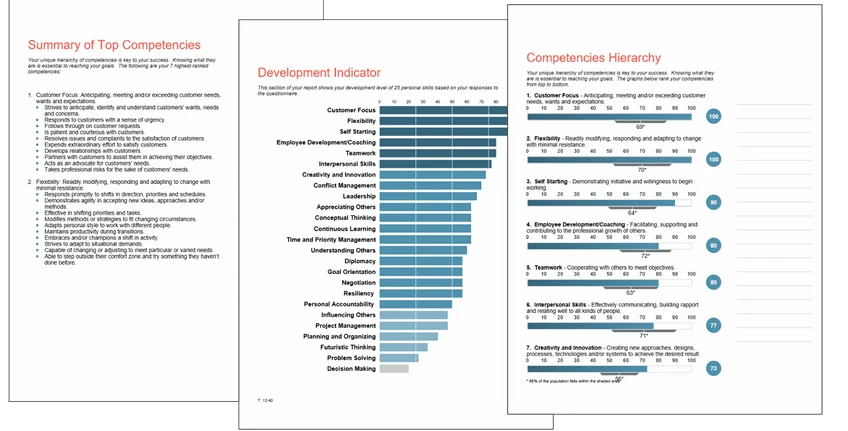
Soft Skills Assessment (DNA 25)
Technical skills get people hired. Soft skills often decide how far they go. The DNA 25 measures the personal skills that drive performance at work, including communication, teamwork, flexibility, and problem solving. These skills carry over from one role to the next, which makes them some of the most valuable skills a person can build.
What it reveals
- A ranked view of each person’s skills, from most developed to least developed
- Their top skills, the ones they can lean on right now
- Development priorities, so growth efforts focus where they’ll matter most
Why it matters: Most people have a rough sense of their strengths, but few can name which skills are holding them back. The DNA 25 turns a vague sense of “I should get better at communicating” into a clear, focused development plan.
How we use it: In leadership development, career pathing, and coaching, to help individuals and their managers agree on what to build next and how.
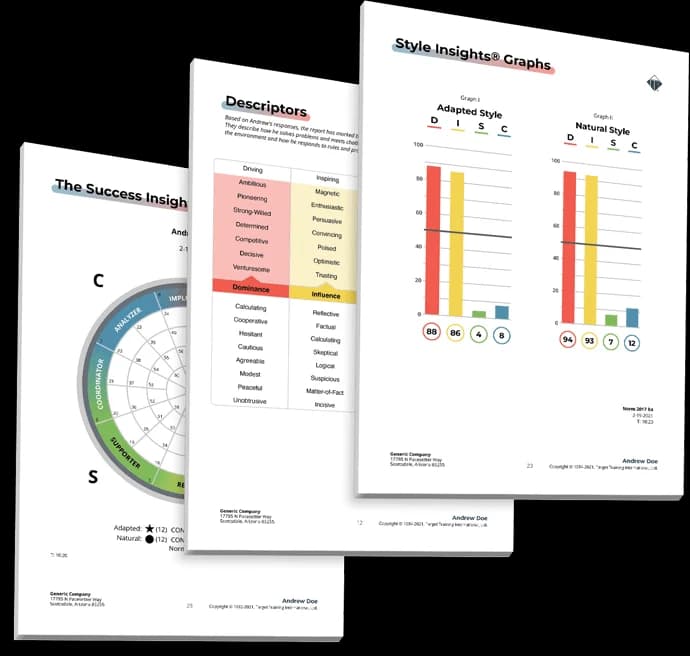
DISC Assessment
DISC is one of the most widely used behavioral assessments in the workplace. It looks at four behavioral factors:
- Dominance: how a person approaches problems and challenges
- Influence: how they interact with people and persuade others
- Steadiness: how they respond to pace, change, and consistency
- Compliance: how they approach rules, procedures, and standards
The report also compares a person’s natural style (how they behave when they’re being themselves) with their adapted style (how they adjust to meet the demands of their role). A wide gap between the two can point to stress or a role that isn’t a good fit.
Why it matters: Most workplace friction isn’t about competence. It’s about style. A fast-moving, direct communicator and a careful, detail-focused one can both be excellent and still frustrate each other. DISC gives teams a simple, shared language to name those differences instead of taking them personally.
How we use it: In team development, communication, and leadership training, to help people understand their own style, read the styles of others, and adjust how they communicate.
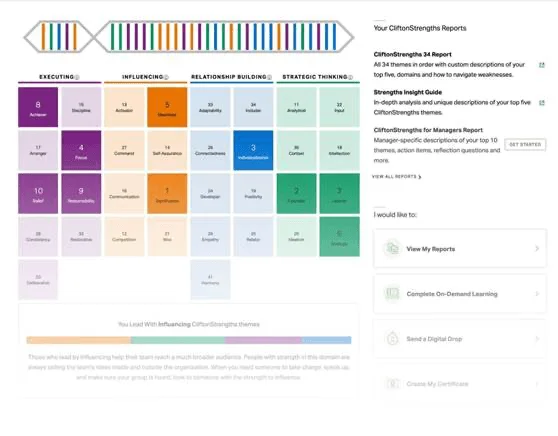
CliftonStrengths
Developed by Gallup, CliftonStrengths is built on a simple but powerful idea: people grow most when they build on their natural talents rather than focusing only on fixing their weaknesses. The assessment identifies a person’s rank order across 34 talent themes, grouped into four domains:
- Executing: making things happen
- Influencing: taking charge, speaking up, and making sure others are heard
- Relationship Building: holding teams together
- Strategic Thinking: absorbing and analyzing information to make better decisions
What it helps individuals do
- Understand their natural talents and leadership style
- Recognize blind spots and manage potential weaknesses
- Build practical strategies to reach their goals
What it helps leaders do
- Understand why their people do what they do
- Learn what motivates each person and when they’re at their best
- Build teams with a balance of strengths across all four domains
How we use it: In team building, leadership development, and coaching, to help teams use their strengths on purpose and lead to each person’s best.
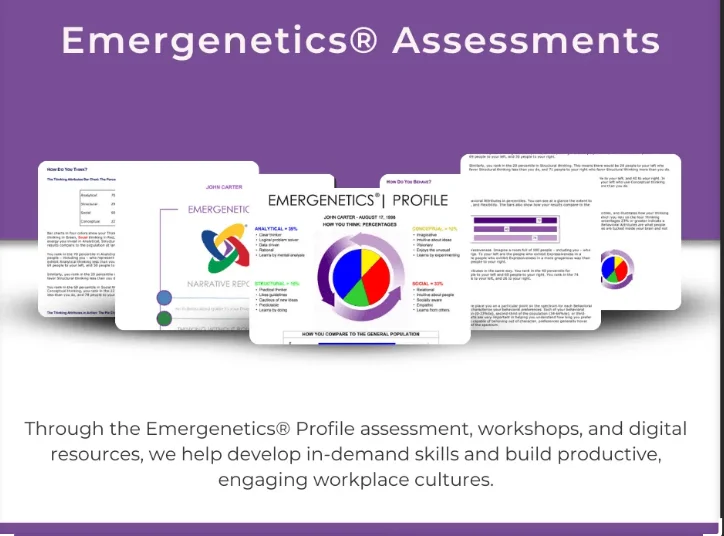
Emergenetics® Assessment
The Emergenetics Profile looks at both how people think and how they behave. It measures four thinking preferences (Analytical, Structural, Social, and Conceptual) and three behavioral attributes (Expressiveness, Assertiveness, and Flexibility). The name reflects the idea that who we are emerges from both our genetics and our life experiences.
What it reveals
- How each person prefers to take in information, solve problems, and make decisions
- How they tend to show up with others
- The mix of thinking styles across a team, including any gaps
Why it matters: Teams that think alike often miss risks and opportunities. Emergenetics makes cognitive diversity visible, so teams can tap into different perspectives on purpose instead of by accident.
How we use it: In team development, leadership training, and individual coaching, to improve communication, strengthen collaboration, and make better decisions together.
Not sure which assessment fits?
Tell us your goals and we'll recommend the right instrument for your team.
Already using one? We'll build on it.